Why test for amino acids?
The proteins you eat are consisting of various amino acids. Some of these amino acids your body needs to maintain important functions. If certain amino acids are lacking, deficiency symptoms can occur. The physical and mental performance then often drops to a limited extent – for example, muscle weakness and cramps, tiredness and exhaustion as well as susceptibility to infections.
The amount of essential amino acids that you need to ingest through food depends on your diet. Above all, your requirements are influenced by intensive sports.
In addition, with a lack of micronutrients, such as vitamins and minerals, as well as with certain diseases – for example, liver diseases – there may also be a deficiency in semi-essential and non-essential amino acids.
Who should take the Amino Acid Blood Test?
We recommend the Amino Acid Test to anyone who wants to get to know and optimise their own nutrient levels better.
People who eat vegetarian or vegan should pay particular attention to their amino acid intake. Because food of animal origin generally has the highest protein quality and thus the best composition of the amino acids. In studies, people who were vegan sometimes had less of certain amino acids in their blood.
Amino acid levels is also an important topic for athletes. Both competitive athletes and committed amateur athletes put their muscles to the test. This can go hand in hand with a greater need for essential amino acids. In addition, certain amino acids, such as the BCAA, may help optimise athletic performance.
The body also needs more amino acids during pregnancy and breastfeeding as well as after muscle injuries.
Older people have lower calorie needs, but still require amino acids and therefore often consume an inadequate amount of amino acids.
How does the Amino Acid Blood Test work?
With one of the lancets included in the Amino Acid Test kit, take three drops of blood and collect them on the dried blood spot card. Send the dried blood spot card together with your blood sample on it by mail to our partner laboratory free of charge using the prepaid return envelope.
In the diagnostic laboratory your blood sample will be tested for the concentration of 26 essential, semi-essential and non-essential amino acids in your blood.
How long does the analysis take in the laboratory?
Once your sample has arrived at the laboratory, it will be analyzed there by specialists. How long the analysis takes depends on the exact measuring method and the processes in the laboratory.
If the sample is sent on the correct days (Sunday to Tuesday), this makes it easier for the laboratory to adhere to the times.
For the Amino Acid Test, the laboratory analysis is usually completed within 6 working days after the sample is received in the laboratory.
What will the test results tell me?
The results report of the amino acid test informs you about the concentration of a total of 26 amino acids in your blood sample. These are measured in nanomoles per millilitre (nmol/ml). The following amino acids are measured:
Essential amino acids: isoleucine, leucine, lysine, methionine, phenylalanine, threonine, tryptophan, valine
Semi-essential amino acids: arginine, asparagine, glutamine, glycine, proline, tyrosine, histidine
Non-essential amino acids: alanine, aspartic acid, beta-alanine, citrulline, gamma-aminobutyric acid (GABA), glutamic acid, homoarginine, ornithine, serine, taurine
In addition to the measured amino acids, you will learn about standard ranges based on studies by our medical partner laboratory. This way, you can find out where you are compared with your supply of the respective amino acid.
What kind of recommendations will I get?
The result report shows you how you can feed your body with the different kinds of essential amino acids in case your current intake is too low. In general, certain foods as well as food combinations can be considered to cover your body’s needs. You will learn what
‘biological valency’ means and how you can use this concept to assess the protein quality of food.
If there is a pronounced deficiency of a certain amino acid, we explain when protein powder, nutritional supplements as well as nutritional advice or medical consultation would be a useful step to take.
What is the function of amino acids?
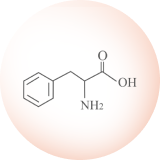
Amino acids are chemical compounds that link together to form long chains, thereby forming proteins, among other things. The 21 different proteinogenic amino acids are the building blocks of proteins and of many important substances in the human body – for example, certain hormones.
The body cannot produce essential amino acids by itself; you have to ingest them through food.
The body can form semi-essential amino acids, but it needs other building blocks that you have to supply to it. Nitrogen is often required, but in some cases it needs essential amino acids. For example, the essential amino acid methionine is used to produce the semi-essential amino acid cysteine. In addition, the body consumes large amounts of the semi-essential amino acids under chronic stress and infections and then requires an external supply.
Non-essential amino acids are amino acids that your body can produce by itself. For this process, it is important that the body is sufficiently supplied with micronutrients (e.g. vitamin B and magnesium).
What is the purpose of amino acids in the body?
The different amino acids have different important tasks in the body. Some of them are involved in the structure and function of muscles, energy metabolism and immune defence. For example, according to some studies, leucine is said to contribute to muscle building and the ability to regenerate.
Amino acids are also needed to produce hormones, enzymes, messenger substances and other substances. The essential amino acid tryptophan, for example, is used in the formation of the happiness hormone serotonin. The messenger substance histamine, which is essential for the immune system, is produced from the semi-essential amino acid histidine.
What are BCAA?
The abbreviation BCAA stands for branched-chain amino acids. It is a subspecies of the essential amino acids with a special chemical structure, which mainly includes isoleucine, leucine and valine.
The BCAA are popular in nutritional supplements and protein powders. They are said to have a positive effect on the energy supply to the muscles and help to build up and maintain muscles. Whether BCAA can actually actively support muscle building is controversial in science. So far, studies have produced contradictory results – even if there have been some studies in which the use of BCAA had a positive effect on muscle growth, regeneration and body weight.
Which foods contain amino acids?
Chicken eggs are considered the best food for amino acid supply. The biological value that describes the quality of a protein source is geared towards the chicken egg: the egg has 100 per cent biological value. In general, foods of animal origin have a higher amino acid composition than plant-based ones.
However, we now know that there are combinations of foods that provide you with amino acids that are even better than eggs. At 136 per cent, a dish with potatoes and egg has the highest value.
But some vegan meals also have excellent protein quality, especially when combining legumes and cereals. For example, the following combinations are recommended:
- Lentil soup or hummus with wholegrain bread
- Oatmeal with soy milk
- Rice with beans
Can too many amino acids be harmful?
Not only can a lack of amino acids be harmful, too many amino acids can also have a negative impact on health. This does not usually occur with a normal diet. However, side effects are possible if you consume a very one-sided protein-rich diet or an excessive dosage of nutritional supplements.
That is why it makes sense to check your levels with our Amino Acid Test before taking supplements.
For example, too much methionine can lead to the excretion of too much calcium, which can weaken the bones and contribute to osteoporosis. Too high a dose of phenylalanine supplements, in some cases, raised blood pressure and could be problematic for people with high blood pressure.
Why are children under 18 not allowed to take the test?
Our tests are not suitable for underage children and adolescents under the age of 18. Under 18s cannot activate the tests online and therefore cannot receive a test result. We ask that you do not administer the tests to your children either.
Children and adolescents need much closer supervision and counselling regarding medical tests and their interpretation. Testing with lancets and chemicals is not without risk and would need to be closely supervised by guardians. In addition, the reference values we give are always based on adult data. In the case of children, the risk of misinterpreting the results would be very high.
We want to fulfil our responsibility as a provider of medical products and ensure that children and adolescents are not unsettled by measurement results that are difficult for them to interpret. Since we cannot control whether the minors' legal guardians actually consent to the test being carried out and supervise them, we exclude tests for under 18s altogether.
If you are under 18 and have purchased a test, please contact our customer support.
Why does it take up to a week for the sample to reach the lab?
Please bear in mind that your results will not be analyzed in the UK but in Germany. For that reason, it can take up to a week for the sample to arrive at the lab. This does not affect the stability of the samples, as the method we are using is optimized for long transports.
Initially, your sample is sent to our collection center in the UK. From there, it is shipped to our central sample sorting facility in Germany, which then distributes samples to our partner laboratories. Once your sample is analyzed there, you will receive a notification and can access your result online.
Please check your mailbox regularly. We will notify you as soon as your sample is sent, arrives, or is analyzed.
Why does the test have an expiration date?
The cerascreen® test kits are CE-marked medical devices, which in turn include other certified medical components such as lancets, patches, and alcohol swabs used in blood tests.
Like most medical devices, these components have an expiration date to ensure that they remain safe and effective. Many of our sample carriers – such as dried blood cards or sample tubes – are chemically treated to keep your sample stable and analyzable in our laboratory. Over time, environmental factors can affect this treatment and compromise accuracy.
Our sterile, single-use lancets also carry an expiration date to guarantee sterility and safe use up to that time.